IBM ADS1 4.8TB NVMe FlashCore Module 01YM582 01YM482 01EK223 03LG613 01YK819 AES1 AHS1

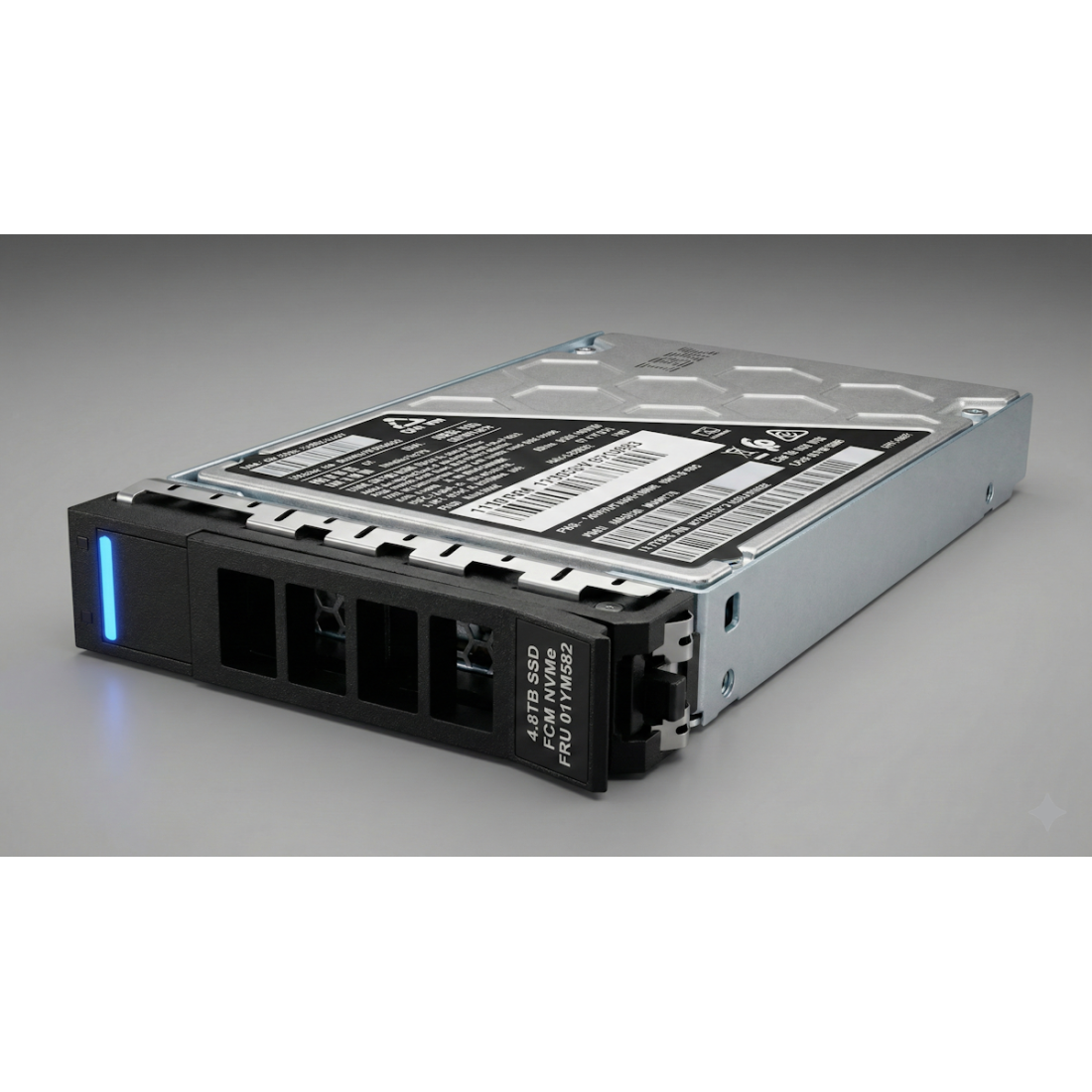


The IBM ADS1 4.8TB 2.5-Inch NVMe FlashCore Module has 01YM582 01YM482 01EK223 03LG613 01YK819 part numbers and AES1 AHS1 feature codes. The IBM ADS1 4.8 TB 2.5-Inch NVMe FlashCore Module represents the pinnacle of storage technology, delivering unparalleled speed, reliability, and capacity to meet the demands of today's data-intensive applications. A maximum of 24 IBM NVMe FlashCore Modules are supported within the following IBM FlashSystem 9100 and 9200 SFF NVMe Control Enclosure models: 9150 9848-AF8, 9150 9846-AF8, 9150 9848-UF8, 9848-AG8, 9848-UG8, 9110 9848-AF7, 9110 9846-AF7, 9110 9848-UF7, and 5100 2078-424 2078-AF4.
Key Features
Impressive Capacity: With a capacious 4.8TB storage capacity, this NVMe FlashCore Module provides ample space to accommodate your growing data requirements. Whether you're dealing with massive datasets or running complex applications, this module ensures that you have the storage space you need.
Lightning-Fast NVMe Technology: Harness the power of Non-Volatile Memory Express (NVMe) technology for accelerated data transfer speeds. Enjoy significantly reduced latency and improved responsiveness, enabling your systems to handle intense workloads with ease.
Optimized Compatibility: Specifically engineered for seamless integration with IBM 2076-724 and 2076-U7B systems, this flash core module ensures a perfect fit. Maximize the potential of your IBM infrastructure with a storage solution designed to complement and enhance your existing setup.
Reliability at its Core: IBM is synonymous with reliability, and this flash core module is no exception. Built with robust components and backed by IBM's reputation for quality, you can trust this module to deliver consistent performance and data integrity.
Compact: The 2.5-Inch form factor of the IBM ADS1 4.8TB 2.5-Inch NVMe FlashCore Module makes it a space-efficient solution without compromising on storage capacity. This compact design allows for optimal use of your FlashSystem's physical space while maintaining a high level of storage density.
Impressive Capacity: With a capacious 4.8TB storage capacity, this NVMe FlashCore Module provides ample space to accommodate your growing data requirements. Whether you're dealing with massive datasets or running complex applications, this module ensures that you have the storage space you need.
Lightning-Fast NVMe Technology: Harness the power of Non-Volatile Memory Express (NVMe) technology for accelerated data transfer speeds. Enjoy significantly reduced latency and improved responsiveness, enabling your systems to handle intense workloads with ease.
Optimized Compatibility: Specifically engineered for seamless integration with IBM 2076-724 and 2076-U7B systems, this flash core module ensures a perfect fit. Maximize the potential of your IBM infrastructure with a storage solution designed to complement and enhance your existing setup.
Reliability at its Core: IBM is synonymous with reliability, and this flash core module is no exception. Built with robust components and backed by IBM's reputation for quality, you can trust this module to deliver consistent performance and data integrity.
Compact: The 2.5-Inch form factor of the IBM ADS1 4.8TB 2.5-Inch NVMe FlashCore Module makes it a space-efficient solution without compromising on storage capacity. This compact design allows for optimal use of your FlashSystem's physical space while maintaining a high level of storage density.
The IBM FlashSystem supports IBM FlashCore Modules, storage-class memory drives, and industry-standard NVMe flash drives, and SED self- encrypting NVMe flash drives of which all can be intermixed. The IBM FlashCore Module integrates IBM MicroLatency technology, advanced flash management, and reliability into a small form factor NVMe module, with built-in, performance-neutral hardware compression and encryption. IBM FlashCore Modules are the fastest of the supported drives, and offer AES-XTS 256 encryption and FIPS 140-2 complaint encryption for securing data at rest compliance requirements.
IBM FlashSystem NVMe Control Enclosures has 24 SFF 2.5 slots, supports up to 20 SFF Expansion Enclosures that have twenty-four 2.5-inch SFF slots, providing a maximum of 504 drives per system. Customers may also attach up to 8 LFF Expansion Enclosures that have ninety-two 3.5 Inch LFF slots for a maximum of 760 drives per system. Intermixing of SFF and LFF Expansion Enclosures is supported. Expansion enclosures are designed to be dynamically added with virtually no downtime, helping to quickly and seamlessly respond to growing capacity demands.
A four-way clustered FlashSystem supports a maximum of 3,040 drives, and can be added into existing IBM Storwize V7000 clustered systems. Further scalability can be achieved with virtualization of external storage. An IBM FlashSystem NVMe Control Enclosure is able to virtualize other non-IBM external storage systems, and its capacity is then able to inherit the functional richness and ease of use of the IBM FlashSystem.
IBM FlashSystems are also ideal for improving IBM i backup and recovery times, which can shrink a backup window to only seconds, and often without any downtime. The IBM i Backup SnapShot software utilizes the FlashCopy and SnapShot features inherent to the storage to make almost instant copies of an IBM i source partition without disrupting production and using minimal storage for various use cases, such as: full system backups, feeding a Data Warehouse for SQL or reporting, to create secondary partitions for testing and keep target synchronized with production, creating anonymized partition for compliance requirements and for creating multiple copies of production data to allow quick recovery due to database corruption and security incidents caused by ransomware encryption attacks.
IBM FlashSystems are also ideal for improving IBM i backup and recovery times, which can shrink a backup window to only seconds, and often without any downtime. The IBM i Backup SnapShot software utilizes the FlashCopy and SnapShot features inherent to the storage to make almost instant copies of an IBM i source partition without disrupting production and using minimal storage for various use cases, such as: full system backups, feeding a Data Warehouse for SQL or reporting, to create secondary partitions for testing and keep target synchronized with production, creating anonymized partition for compliance requirements and for creating multiple copies of production data to allow quick recovery due to database corruption and security incidents caused by ransomware encryption attacks.
8960-F24 IBM SAN24B-6 Storage Networking Switch
Call for Price: (888) 682-5335
IBM 9150-AF8 FlashSystem 9848-AF8 NVMe Control Enclosure
Call for Price: (888) 682-5335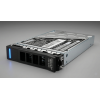
IBM AHS2 9.6 TB Flash Core Module
Call for Price: (888) 682-5335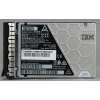
IBM AHS5 4.8 TB Flash Core Module
Call for Price: (888) 682-5335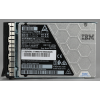
IBM AHS1 4.8 TB NVMe Flash Core Module 2.5-inch
Call for Price: (888) 682-5335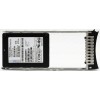
02PX542 IBM 3.84 TB Flash Drive 2.5 Inch SFF
Call for Price: (888) 682-5335
IBM 5600 FlashSystem 5127-A20
Call for Price: (888) 682-5335
2072-2H4 IBM FlashSystem 5010 SFF Control Enclosure
Call for Price: (888) 682-5335
IBM FlashSystem 9600 5078-A40
Call for Price: (888) 682-5335
IBM FlashSystem 5045 FS5045 4680-3P4
Call for Price: (888) 682-5335
IBM FlashSystem 7200 2076-824 Storage System
Call for Price: (888) 682-5335